⚡ Quick Answer
A room fragrance spray instantly transforms your space with scent, creating atmosphere and masking odors. The key is choosing the right formula, spraying technique, and placement to maximize impact without overwhelming your senses.
Room Fragrance Spray at a Glance
I’ve tested countless room fragrance sprays over the years, and they really do make a difference in how a space feels. A room fragrance spray is a quick way to refresh your environment, whether you’re preparing for guests or just want your bedroom to smell inviting. Unlike plug-in diffusers or candles, sprays give you instant control—one or two spritzes and you’re done.
The beauty of a room fragrance spray is that it works fast and doesn’t require electricity or an open flame. You get immediate scent gratification, and you can reapply whenever you want. I noticed that the best results come from understanding how to use them properly, which spray formulas work best for different spaces, and how to avoid that chemical or overwhelming smell that cheap sprays sometimes create.
How Room Fragrance Spray Works and What Makes It Effective
A room fragrance spray functions by dispersing fragrance molecules into the air through a fine mist. When you press the nozzle, the formula atomizes and settles on surfaces and floats through your space. The staying power depends on several factors: the concentration of fragrance oils, the size of your room, air circulation, and humidity levels.
I’ve found that alcohol-based sprays tend to evaporate faster but disperse more evenly, while oil-based formulas linger longer on surfaces. Understanding fragrance families helps you pick scents that complement your space—fresh citrus for bathrooms, warm vanillas for living rooms, and crisp florals for bedrooms work best in my experience.
The spray mechanism itself matters too. A quality atomizer creates a fine, even mist rather than large droplets. Large droplets settle too quickly and can leave wet spots on furniture or create an uneven scent distribution. I always test the spray pattern before committing to a product.
To maximize effectiveness, apply your room fragrance spray in the center of the room or near air vents so the scent circulates naturally. Avoid spraying directly on fabrics unless the product specifically says it’s safe—some sprays can stain or damage delicate materials. For tips on preserving your fragrances, check out proper cologne storage practices that apply to spray bottles too.
Best Times and Places to Use Room Fragrance Spray
Timing matters when using room fragrance spray. I use mine in the morning to set the tone for the day, before guests arrive to create a welcoming atmosphere, and in the evening to wind down. The right moment makes the scent feel intentional rather than desperate.
Different rooms call for different approaches. Bedrooms benefit from lighter, softer scents applied sparingly before sleep. Kitchens need stronger sprays to combat cooking odors—I usually spray after meals. Living rooms work well with medium-strength fragrances that create ambiance without being aggressive. Bathrooms are perfect for quick spritzes after showers or bathroom use.
I’ve noticed that spraying when your windows are cracked open works better than in completely sealed rooms—a little air movement helps distribute the scent evenly. During humid weather, sprays work harder because moisture carries fragrance molecules further. In dry climates, you might need to spray more frequently.
For spaces you want to smell fresh all day, I recommend spraying once in the morning and once in the late afternoon rather than multiple times at once. This prevents scent fatigue where you stop noticing the smell altogether. Small guest bathrooms are ideal for room fragrance spray because the enclosed space means one or two spritzes is plenty.
The Strengths and Weaknesses of Room Fragrance Spray
Room fragrance spray has clear advantages that make it popular. On my skin and in my spaces, I’ve seen these benefits consistently:
- Instant gratification—scent appears immediately without waiting
- Complete control over how much fragrance you use
- No electricity needed, making it perfect for any room
- Portable and convenient for travel or temporary spaces
- Works alongside other scenting methods without conflict
- Easy to switch scents based on mood or season
The drawbacks are real though, and I’ve encountered them regularly:
- Scent doesn’t last as long as diffusers or candles—usually 2-4 hours max
- Requires repeated applications throughout the day
- Some formulas can feel chemical or artificial if not chosen carefully
- Easy to over-apply and create an overwhelming or artificial smell
Understanding these trade-offs helps you decide if room fragrance spray is right for your situation. For longer-lasting solutions, consider how to make fragrance last longer through layering techniques or combining sprays with other methods.
✅ Pros
- Instant scent gratification—works immediately when sprayed
- Complete control over application and frequency
- No electricity or open flame required
- Easy to switch scents based on mood or season
- Portable and works in any room
- Perfect for quick odor control and refreshing spaces
❌ Cons
- Scent duration is short—typically 2-4 hours
- Requires frequent reapplication throughout the day
- Risk of over-applying and creating overwhelming smell
Room Fragrance Spray Compared to Other Scenting Methods
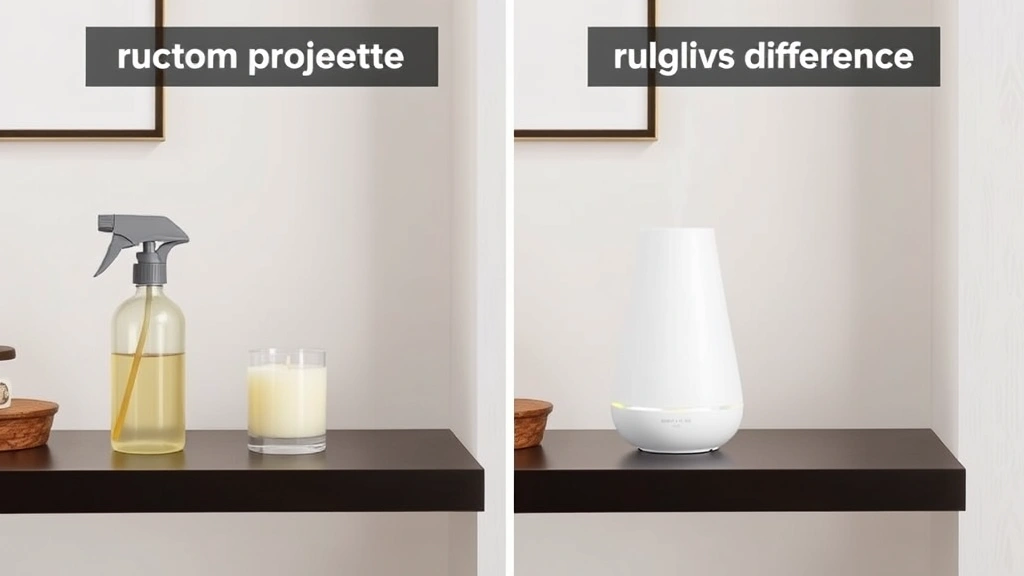
I use different scenting tools for different situations, and room fragrance spray isn’t always the best choice. Let me break down how it compares to alternatives.
Versus Plug-In Diffusers: Plug-ins provide consistent, hands-free scent all day and night. They’re better for spaces where you want passive fragrance. But they’re less flexible—you’re stuck with one scent until the refill runs out. Sprays let you change your mind instantly.
Versus Candles: Scented candles create ambiance and warmth alongside fragrance. They last longer than sprays, usually 6-8 hours per burn. The downside is the open flame and the fact that you need to light them. Sprays are safer and faster.
Versus Diffuser Reeds: Reed diffusers provide passive, continuous scent for weeks. They’re elegant and require no maintenance. They’re also slower to fill a space with fragrance compared to the instant hit of a spray.
Versus Fresh Flowers or Plants: Natural scenting options are beautiful and add life to your space. They’re subtle though, and don’t work for masking strong odors. Sprays are more powerful.
I often combine room fragrance spray with other methods. For example, I’ll use a spray for quick refreshes during the day, then light a candle in the evening for ambiance. Or I’ll use a plug-in diffuser for baseline scent and spray before guests arrive for an extra boost. Exploring different fragrance families helps you coordinate scents across your various methods.
💡 Pro Tip: Spray in the center of the room or near air vents for better distribution
Making the Most of Room Fragrance Spray
After extensive testing, I can say that room fragrance spray is an essential tool for anyone who cares about how their space smells. It’s not the only solution, but it’s often the most practical one for daily use.
The key to success is choosing quality formulas that smell natural rather than chemical, understanding your room size and air flow, and using restraint with your spraying. One or two spritzes beats five spritzes every time. Your nose adjusts to constant scent, so less frequent, lighter applications feel fresher than overdoing it.
Invest in products from brands known for clean formulations rather than the cheapest option at the drugstore. The difference in how natural the scent smells is dramatic. Pay attention to spray mechanism quality too—a fine mist beats a heavy spray pattern.
Store your room fragrance spray bottles properly to maintain scent quality. Following cologne storage guidelines applies to sprays as well—keep them away from direct sunlight and extreme temperatures to preserve the fragrance integrity.
Room fragrance spray works best as part of a layered approach to scenting your home. Use it for quick refreshes and emergency odor control. Combine it with longer-lasting methods like diffusers or candles for consistent background scent. Change your scent seasonally to keep your space feeling fresh and intentional. With these strategies, you’ll create a home that not only looks good but smells incredible too.
❓ Frequently Asked Questions
How long does room fragrance spray actually last?
Most room fragrance sprays last 2-4 hours depending on room size, air circulation, and formula strength. Smaller rooms hold scent longer. I reapply once or twice daily for consistent fragrance, rather than spraying multiple times at once.
Can I use body fragrance spray in my room?
Technically yes, but I don’t recommend it. Body sprays are formulated for skin and may contain ingredients not ideal for inhaling in large quantities. Room sprays are specifically designed for safe, extended air exposure. Plus, body sprays are expensive to use as room fragrance.
What’s the best way to avoid that chemical smell from room sprays?
Choose brands that use natural essential oils or high-quality fragrance concentrates rather than synthetic compounds. Always spray lightly—chemical smell often comes from overdoing it. Let the mist settle naturally instead of fanning it around. I test sprays in-store before buying to assess the actual scent quality.
Is it safe to spray room fragrance around pets?
Some sprays are safe around pets, but many aren’t. Always check the label first. Cats are especially sensitive to certain fragrance compounds. I prefer unscented or pet-safe options in homes with animals, or I spray in rooms my pets don’t access regularly.
How do I choose the right scent for my room?
Consider the room’s purpose and existing décor. Light, fresh scents work in bathrooms and kitchens. Warm, cozy scents suit bedrooms and living rooms. Test scents in person when possible—what smells good in the store might feel different in your actual space. Explore different fragrance families to find what resonates with you.
Can I make my own room fragrance spray?
Yes, you can mix fragrance oils with water and a dispersant, but it’s tricky to get the ratio right without proper emulsifiers. Commercial sprays are formulated for even dispersal and safety. If you want a DIY option, look for pre-made fragrance spray bases designed for this purpose rather than improvising.